Cracked clay tiles
Older chimneys are lined with clay tiles that crack with age, heat, and settling. Cracks let heat and smoke reach the brick and the framing around it.
- Found by camera inspection
- Common in older homes
- Relined in stainless steel
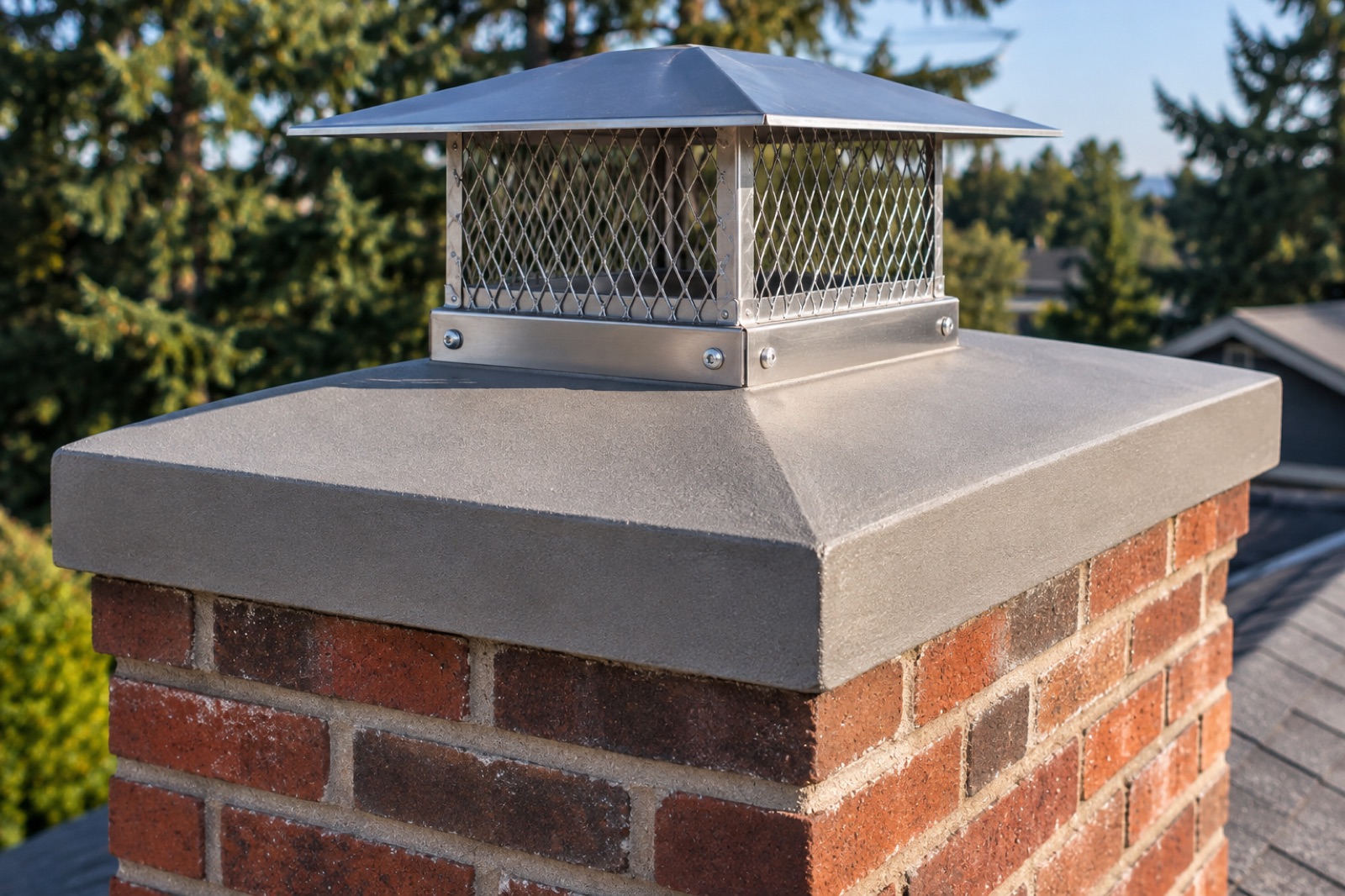
Caps, dampers & liners
A chimney without a cap is an open hole in your roof. We install caps, chase covers, top-sealing dampers, and stainless steel liners that keep water and animals out and help your fireplace draw the way it should.
Chimneys swept and inspected, so every fire burns the way it should.
Gutters and roofs kept clear, so rain goes where it belongs.
Floors covered, work areas contained, and nothing left behind.
Photos of what we find, and a written price before any repair.
What's included
Small parts, big job. Each one is measured for your chimney and installed to stay put.
Stainless steel or copper caps with mesh sides that keep out rain, leaves, birds, and squirrels.
For factory-built chimneys: a new sloped metal cover to replace a rusted one that's letting water in.
A damper at the top of the flue with a gasket seal, for when the old throat damper is rusted or missing.
A new liner sized to your fireplace, insert, or stove, for a safe and properly drafting flue.
Liners
The liner is what contains the heat and smoke on the way up. An inspection tells us whether yours is doing its job.
Older chimneys are lined with clay tiles that crack with age, heat, and settling. Cracks let heat and smoke reach the brick and the framing around it.
An insert or stove needs a liner sized to its outlet. Venting it into a large open flue causes poor draft and fast creosote buildup.
Some older chimneys were built without a liner. Bare brick and mortar break down from heat and the acids in smoke.
How it works
Four of the six steps happen before any work begins, so you always know what's being done and why.
Tell us what you need and where you are. We confirm a day and an arrival window.
Floors and furniture near the fireplace are covered, and outdoor work areas are set up safely.
Before any tools come out, we check the chimney, gutters, roof, or vent and take photos.
You see what we found. If anything beyond the booked service is needed, you get the price first.
The job you approved, done carefully and by the book.
We clean up, haul away debris, and walk you through what was done, with photos.
FAQ
Anything else, ask us when you book.
Yes. A cap keeps rain from running straight down the flue, keeps birds, squirrels, and raccoons from moving in, and stops leaves and needles from blocking it. It's one of the least expensive ways to protect a chimney.
We can install a cap with mesh to keep animals out. Some birds are protected by federal law while they're nesting, so timing matters. We'll tell you what can be done and when.
Factory-built fireplaces often vent through a wood-framed box called a chase, with a metal cover on top. The original covers are usually thin steel that rusts through, which lets water into the chase. A sloped stainless steel cover fixes it.
It closes the flue at the top with a rubber gasket, which seals much tighter than an old cast-iron damper. That keeps out rain and animals, and keeps heated air from escaping up the chimney when the fireplace isn't in use.
More services
Many of these can be done in the same visit.
Tell us what your home needs. We'll confirm a time and take it from there.