Wood to gas
A gas insert fitted into your existing wood-burning fireplace. A fire at the push of a button, with no wood to carry and no ash to clean out.
- Uses the existing opening
- No wood, no ash
- Needs a gas line and a vent liner
Fireplaces & stoves
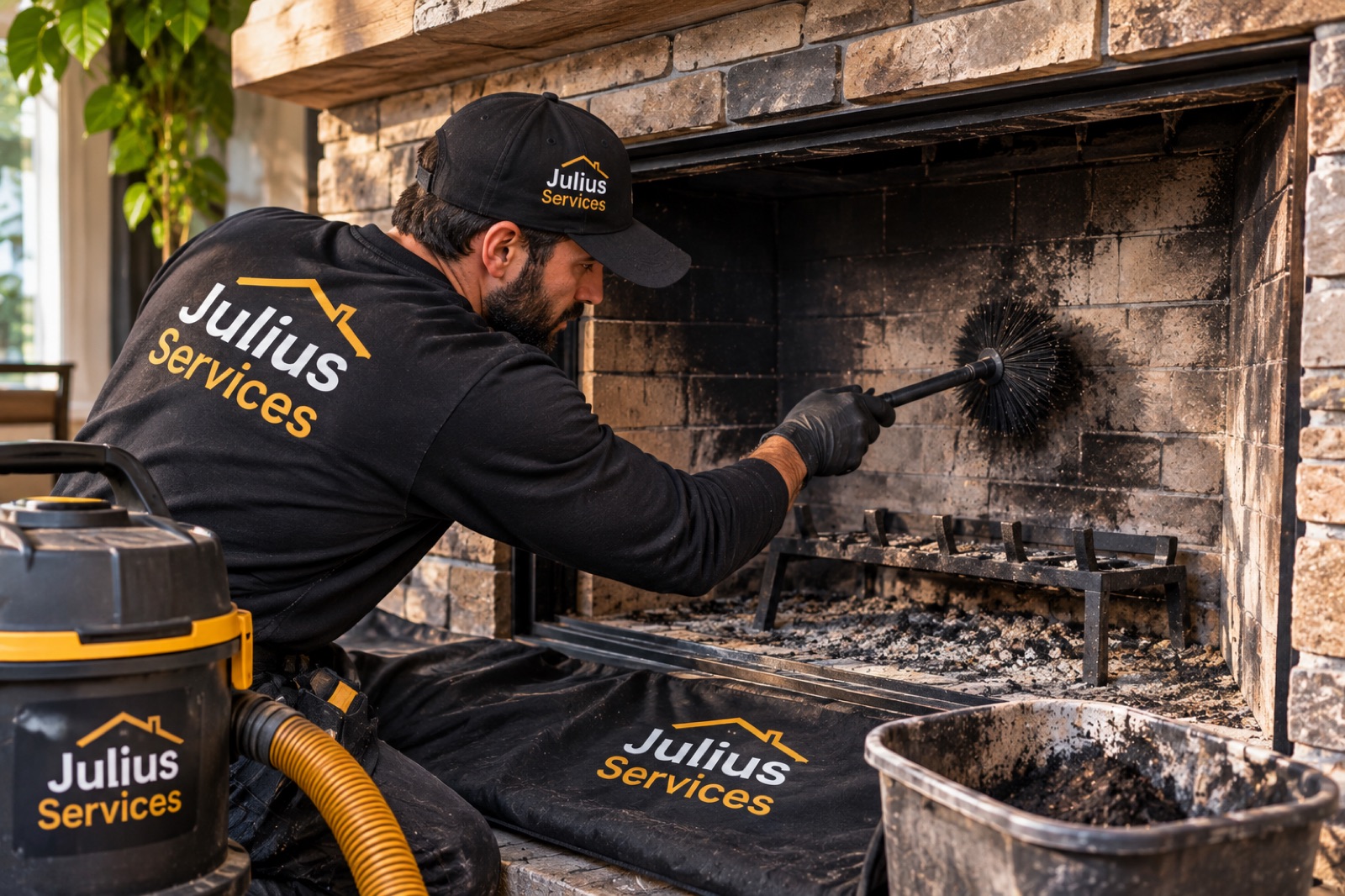
A fireplace should light easily, pull smoke up the chimney, and leave the room smelling like nothing at all. If yours doesn't, we find out why, and get it burning the way it should.
Chimneys swept and inspected, so every fire burns the way it should.
Gutters and roofs kept clear, so rain goes where it belongs.
Floors covered, work areas contained, and nothing left behind.
Photos of what we find, and a written price before any repair.
What's included
Cleaning, checks, and repairs for the appliance itself, alongside the chimney above it.
Firebox cleaning, damper service, firebrick and mortar repair, and a check of the smoke chamber.
The insert pulled or accessed for cleaning, the liner swept, and door gaskets and baffles checked.
Stovepipe and vent cleaning, baffles and ash traps cleared, and gaskets checked for a tight seal.
Smoke in the room, slow starts, and smells in damp weather traced to their cause and fixed.
Fireplace conversions
If your fireplace is more work than you want, or just isn't being used, it can be converted. We'll look at the fireplace and the chimney and tell you which options fit.
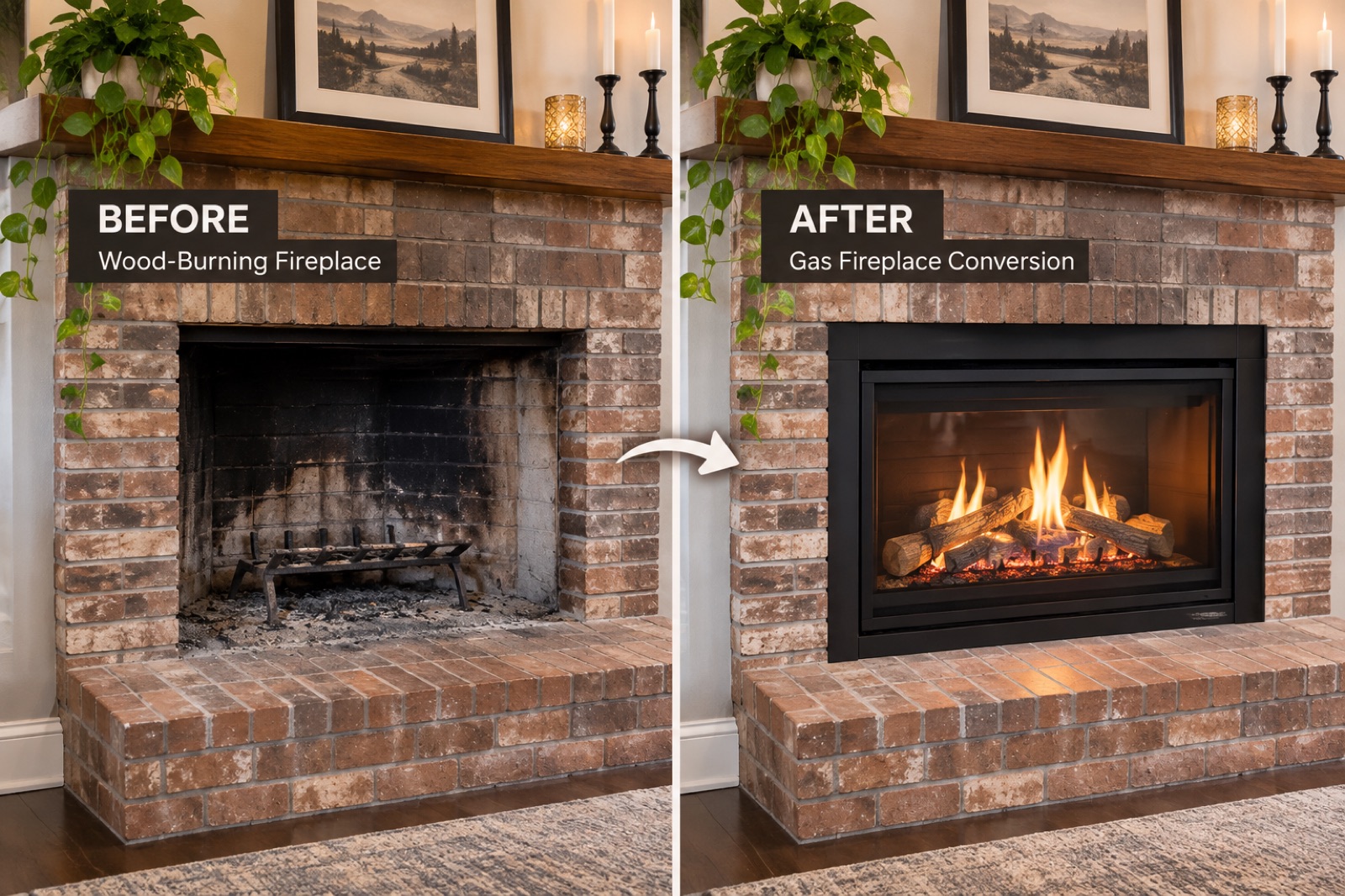
A gas insert fitted into your existing wood-burning fireplace. A fire at the push of a button, with no wood to carry and no ash to clean out.
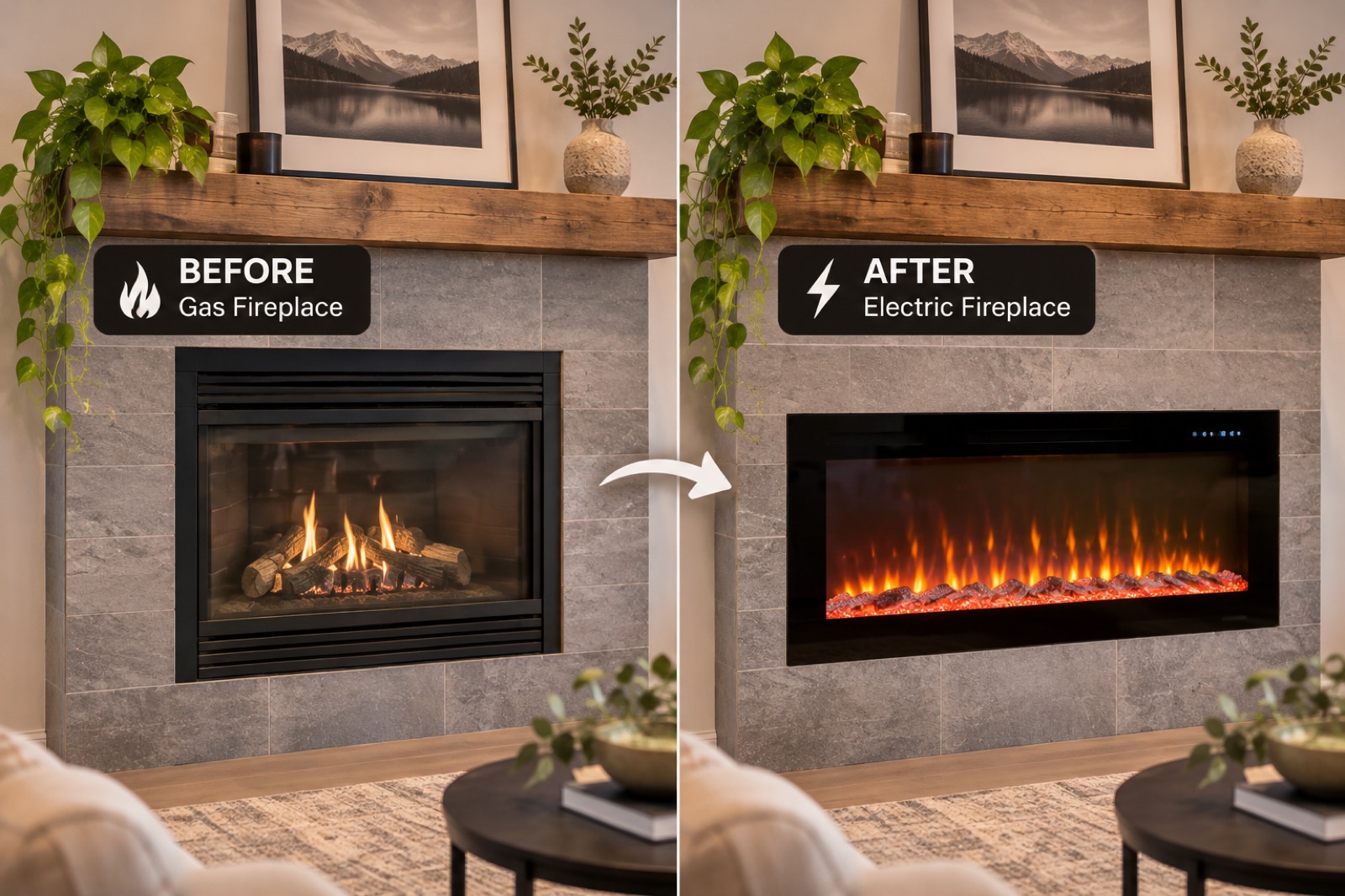
An electric fireplace in place of an older gas unit. It needs no vent and no gas line, and it can run with or without heat.
Nothing replaces a real wood fire. A high-efficiency wood insert and a properly sized liner give you far more heat from the same fireplace.
Conversions
What a conversion looks like in the same fireplace opening.
 Conversion
 Conversion
How it works
Four of the six steps happen before any work begins, so you always know what's being done and why.
Tell us what you need and where you are. We confirm a day and an arrival window.
Floors and furniture near the fireplace are covered, and outdoor work areas are set up safely.
Before any tools come out, we check the chimney, gutters, roof, or vent and take photos.
You see what we found. If anything beyond the booked service is needed, you get the price first.
The job you approved, done carefully and by the book.
We clean up, haul away debris, and walk you through what was done, with photos.
FAQ
Anything else, ask us when you book.
Most can. It depends on the size of the firebox, the condition of the chimney, and whether a gas line can reach the fireplace. We check all three before recommending it.
The common causes are a dirty or blocked flue, a damper that isn't fully open, a cold flue that needs warming before the fire is lit, or a house that's sealed so tightly the chimney can't pull enough air. We check each one.
Creosote and soot in the flue smell stronger when they get damp, and air moving down the chimney carries the smell into the house. A sweep, a cap, and a tight-sealing damper usually solve it.
The Puget Sound Clean Air Agency calls burn bans when air quality is poor, and they restrict the use of fireplaces and wood stoves unless wood is your only adequate source of heat. Check the agency's current status before lighting a fire.
Dry, seasoned firewood, split and stored under cover for at least six months to a year. Wet wood, trash, and treated lumber make more smoke and far more creosote.
More services
Many of these can be done in the same visit.
Tell us what your home needs. We'll confirm a time and take it from there.